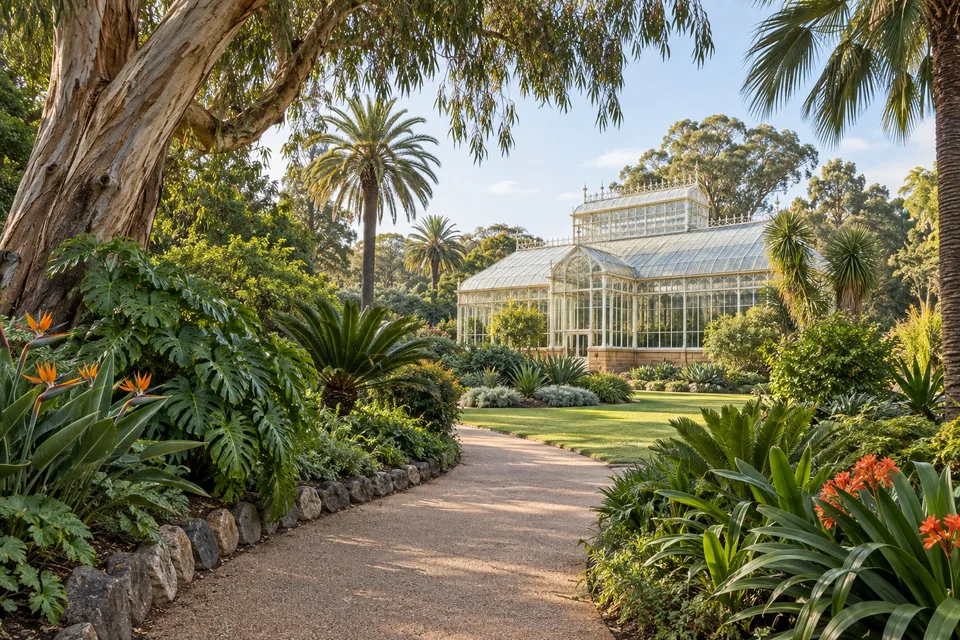
Adelaide Botanic Garden gives the east end of the city a different rhythm. The official Garden guide (opens in a new tab) describes a 50-hectare landscape of Australian and international plant collections, with pathways that can turn a short pause into a longer walk. It is not simply a green backdrop to North Terrace: collections, glasshouses and the Museum of Economic Botany provide several ways to shape a visit around plants, design and the uses people have made of them.
Start with the collection that interests you
The Garden's named areas include the Garden of Health, Mediterranean Garden and Rose Garden. Choosing one of these as a first waypoint makes a broad site easier to navigate, while leaving room for discoveries along the paths. The Museum of Economic Botany is part of the setting, offering a focused view of the relationship between plants and human life. Visitors can use the map and visitor information provided by the Gardens to decide whether a short circuit or a few hours of exploration suits the day.
Architecture adds another layer. The official architecture guide (opens in a new tab) identifies the Palm House, built in 1877 and home to a collection of plants from Madagascar, as well as the 1989 Bicentennial Conservatory, described as the Southern Hemisphere's largest single-span glasshouse. These are useful destinations within a wider walk, rather than reasons to rush past the garden beds between them.
Arrive with the season in mind
The Garden is in Adelaide's east end and is open daily with free daytime entry. Its plan-your-visit page (opens in a new tab) lists six entrances, including the North Terrace Main Gate, and notes that opening times vary with daylight-saving seasons. From April to September, the current hours are 7.15am to 5.30pm on weekdays and 9am to 5.30pm on weekends and public holidays; from October to March, closing moves to 6.30pm. Check the official page close to travel, especially around public holidays or ticketed evening events.
Practical access and a respectful pace
The Botanic Gardens tram stop is about 100 metres from the Main Gate, and the Gardens also point visitors to bus and city-connector services. Most paths are paved or bitumen, though some areas have gravel or sawdust surfaces; the Hackney Gate has a gradient and is the exception to the Garden's wheelchair-accessible entrances. The Bicentennial Conservatory has a ground-level path and a raised boardwalk. Bikes and scooters may be used to reach the Garden but not inside it, and visitors are asked to protect the living collections by staying out of beds and waterways.
A visit works best as an unhurried city walk: choose a collection, take in one of the glasshouses or historic structures, then allow the paths to connect the rest. The official guide says a brief stop or several hours can both make sense across the 50-hectare site. That flexibility is the Garden's strength, provided the practical details are checked before setting out.
Sources
Sources last validated: 14 September 2026.