Fresh produce under one roof, plants gathered from across the world and art along North Terrace offer three different ways into Adelaide. At the Central Market, the choices range from fruit and vegetables to cheeses, seafood and baked goods. At Adelaide Botanic Garden, the collections extend into glasshouses and a museum devoted to the relationship between people and plants. Together, they give a first visit a focus beyond simply ticking off city sights.
South Australia’s capital sits between the Adelaide Hills and metropolitan beaches. Begin with the city centre, then choose whether to spend more time among its collections and Park Lands or extend the visit to the coast. Adelaide is on Kaurna Country: the City of Adelaide acknowledges the Kaurna People of the Adelaide Plains as Traditional Custodians and recognises their enduring connection to Country.
Gardens with more than a view
Adelaide Botanic Garden (opens in a new tab) brings together Australian and international plants across 50 hectares. Its named collections include the Garden of Health, Mediterranean Garden and Rose Garden. The Museum of Economic Botany adds another perspective, exploring the place of plants in human life. Choose a collection that interests you and leave time to explore its wider setting.
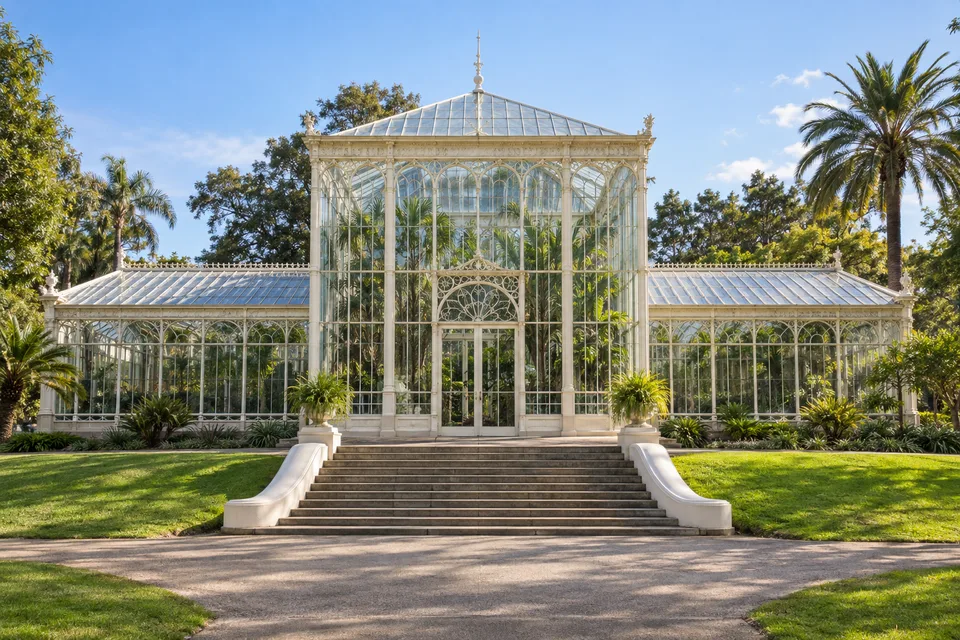
The buildings are part of the attraction. The Palm House, built in 1877 (opens in a new tab), contains plants from Madagascar. The Amazon Waterlily Pavilion’s design draws on the structure of a waterlily leaf, while its central pond dates to 1868. These are specific places to seek out within the Garden, rather than treating the entire visit as a walk through greenery.
The Garden is at the eastern end of the city, with a main entrance on North Terrace. Daytime entry is free. Check the Garden’s access and seasonal opening information (opens in a new tab) before setting out; building hours can differ from the grounds. Bike racks are available outside the entrances. For wheelchair access, the published guide identifies Hackney Gate’s gradient as the exception to otherwise accessible gates.
Make room for the Market
The Adelaide Central Market (opens in a new tab) combines fresh-food shopping with cafés and places to eat. Fruit, vegetables, meat, poultry, seafood, cheese, bakery goods and smallgoods give visitors plenty to browse. It is a useful place to build a food stop into a city visit, whether the interest is in ingredients or a meal.
Find it at 44–60 Gouger Street, with public entrances on Gouger and Grote streets. The Market’s visitor information (opens in a new tab) currently lists trading from Tuesday to Saturday, including Friday evenings, and closure on Sunday and Monday. Wednesday has a reduced range of traders. Check individual traders before planning around a particular purchase. The same page provides an access guide, wheelchair-access information and details of toilets and parking.
Art on North Terrace
The Art Gallery of South Australia (opens in a new tab) gives a city day a different focus. Its collection spans Australian, European, North American and Asian art, including Indigenous art. Displays bring works together through cultural and thematic connections, offering reasons to pause over the relationships between objects as well as individual works. Plan around the current gallery programme if a particular exhibition or guided visit matters to you.
For help connecting these city stops, the Adelaide Visitor Information Centre (opens in a new tab) is at 25 Pirie Street, behind Adelaide Town Hall, on weekdays. Its volunteers provide maps, directions and holiday-planning advice. On weekends and public holidays, the Mobile Visitor Information Bike operates in Rundle Mall.
Add the coast, with conditions in mind
Glenelg (opens in a new tab) offers a metropolitan beach, jetty, shops and cafés, with Moseley Square and the foreshore as further places to explore. A waterfront visit can be about a walk and something to eat as much as time in the water.
Before swimming, check current local conditions and South Australia’s algal-bloom advisory (opens in a new tab). It directs visitors to avoid foamy or abnormally coloured water. Surf Life Saving SA (opens in a new tab) advises choosing a beach with patrolling lifesavers or lifeguards, obeying safety signs and never swimming alone. Its resources point to Beachsafe for local conditions and lifesaving services. For a separate excursion into the Adelaide Hills, consult park closures and alerts (opens in a new tab) for the specific park first.
Leave room for whichever part of Adelaide holds your attention: the Market’s food stalls, the Palm House’s glass-and-iron architecture or the waterfront at Glenelg. Each gives the visit a different centre of gravity.
Sources
- South Australian Tourism Commission — Adelaide (opens in a new tab)
- South Australian Tourism Commission — Adelaide Visitor Information Centre (opens in a new tab)
- Surf Life Saving SA — Coastal safety resources (opens in a new tab)
- National Parks and Wildlife Service South Australia — Closures and alerts (opens in a new tab)
- Botanic Gardens and State Herbarium — Plan your visit: Adelaide Botanic Garden (opens in a new tab)
- Adelaide Central Market Authority — Access and facilities (opens in a new tab)
- City of Adelaide / Kadaltilla Adelaide Park Lands Authority — Acknowledgement of Country decision (opens in a new tab)
- Botanic Gardens and State Herbarium — Adelaide Botanic Garden (opens in a new tab)
- Botanic Gardens and State Herbarium — Architecture (opens in a new tab)
- South Australian Tourism Commission — Adelaide Central Market (opens in a new tab)
- South Australian Tourism Commission — Art Gallery of South Australia (opens in a new tab)
- South Australian Tourism Commission — Glenelg Beach (opens in a new tab)
- South Australian Tourism Commission — Algal bloom
Sources last validated: 12 September 2026.